|
1
|
- Marty Blake
- The Prime Group, LLC
- 502-425-7882
|
|
2
|
- Who are your most profitable customers?
- Are all of your customers contributing to margins or are margins on some
customers negative?
- Which customers are your competitors most likely to target?
- Does your current rate design result in price exposure in a retail
choice environment?
|
|
3
|
- If you have no idea where your competitors will attack, it is difficult
to prepare a solid defense
- You need a scouting report on areas where you are vulnerable
- Marketing resources are limited and targeting is necessary for maximum
effectiveness
- Individual customer profitability is the key
|
|
4
|
- Profit = Revenue -
Cost
- Revenue = Price
x Quantity Sold
- Total Cost = Fixed Cost + Variable Cost
- Sounds easy, but …
|
|
5
|
- Relatively easy to determine historically
- Determined from customer billing data for a specific period
- Usually a fixed price environment
- Difficulties predicting future revenue
- Price elasticity of demand (how does quantity change in response to
price changes)
- Quantity drivers – weather, economic conditions
- Price variability
|
|
6
|
- Fixed costs
- Generation capacity
- Transmission capacity
- Distribution capacity
- Variable costs
- Fuel
- Environmental controls – scrubber reactant, emissions allowances
|
|
7
|
- Fixed cost – time that the demand is placed on the system
- Generation – Coincident peak demand
- Transmission – Coincident peak demand
- Distribution - Non-coincident peak demand
- Variable cost – time of use
|
|
8
|
- Because time is a critical cost driver, it is essential to determine
when customers place demands on the system or when they use energy
- Need timed usage data to accurately allocate fixed costs (at least
hourly readings)
- Need timed usage data to accurately allocate variable costs
|
|
9
|
- $450/kW for installed frame gas turbine
- 20% carrying charge
- $450 x .20
= $90/kW/year revenue requirement
- Over how many hours will this cost be allocated?
|
|
10
|
|
|
11
|
|
|
12
|
|
|
13
|
|
|
14
|
- $4/MCF natural gas
- 10,000 BTU/kWh
- $0.04/kWh variable cost using natural gas
- About $0.01 to $0.015/kWh variable cost using coal
|
|
15
|
- Take variability on the supply side
- Build capacity to meet the peaks
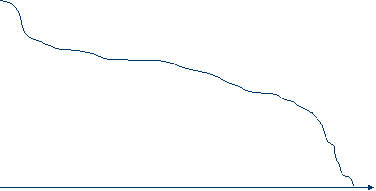
- Given the shape of the load duration curve, this can be expensive
- Take variability on the demand side
- Price signals
- Equipment to help customers respond to price signals
- Load control
- Utilize both supply and demand sides
|
|
16
|
- Given the substantial fixed and variable cost of peaking units
- To which customers will peaking capacity costs be allocated?
- To which customers will coal based fuel costs be allocated?
- To which customers will natural gas based fuel costs be allocated?
- Time of use is the key
|
|
17
|
- Data necessary to estimate price elasticity of demand
- Need means of sending real time price signal to customers
- Integrating price signal with customer controlled equipment to respond
to price
- Provide customers with real time usage information
|
|
18
|
- AMR can play a substantial role whether the supply side approach, the
demand side approach or a mixed approach is adopted
|
|
19
|
- If you are going to incur substantial peaking costs, it is important to
allocate them correctly
- Timed usage data makes fixed and variable cost allocation much more
accurate
- Greatly improves accuracy of cost of service studies
- Greatly improves calculation of individual customer profitability
|
|
20
|
- Incorrect allocation of substantial fixed and variable costs will result
in some customers subsidizing the usage of other customers
- Subsidies are not sustainable in a retail choice environment
- Customers paying the subsidies will select another energy supplier
(competitive exposure)
|
|
21
|
- Provides data necessary to estimate price elasticity of demand (price
responsiveness)
- Can provide infrastructure for transmitting real time price signals to customers
|
|
22
|
- AMR installation has frequently been justified based on operational
savings
- Another magnitude of savings may result from utilizing price response
- With high wholesale power prices
- Being a seller rather than a buyer
- Usage information as a saleable product
|
|
23
|
- Operational savings
- Purchased power savings
- Wholesale power revenues
- Selling customer usage information
- Accurately allocating costs and determining customer profitability
- Utilizing multiple benefits is the key
|
|
24
|
|
|
25
|
- Provides detail regarding a utility’s cost structure
- Provides data for pricing efforts
- Identifies differences in rates of return among rate classes
- Can be used to determine the characteristics of an “average” customer in
each class
|
|
26
|
|
|
27
|
|
|
28
|
- Rates support the average customer
- Which customers do you want to attract or to help expand?
- Attracting customers that are better than “average” will help to grow
margins
- Attracting customers that are worse than “average” will reduce margins
and can result in financial distress
- Identifying better than average customers
|
|
29
|
- What does the average customer look like?
- Plant investment
- Load factor
- Operating expense
- revenue
- Margin
|
|
30
|
- Picks up where cost of service leaves off
- Allocates costs and revenues to individual customers
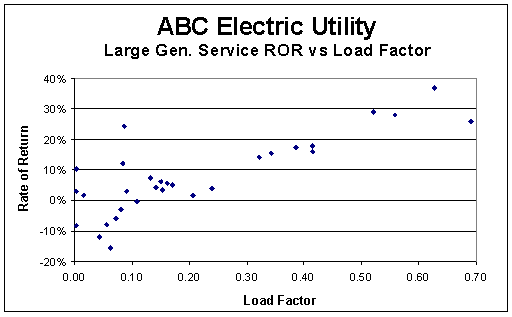
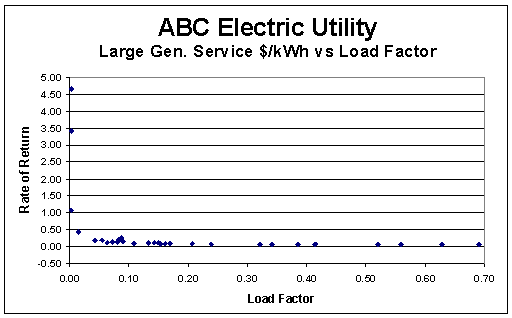
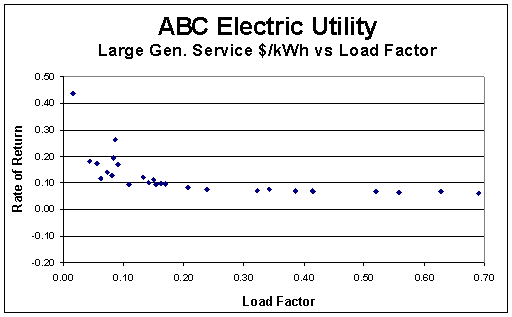
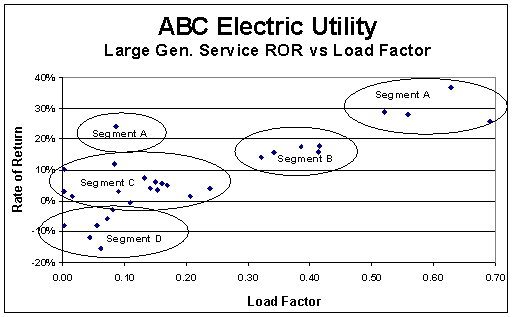
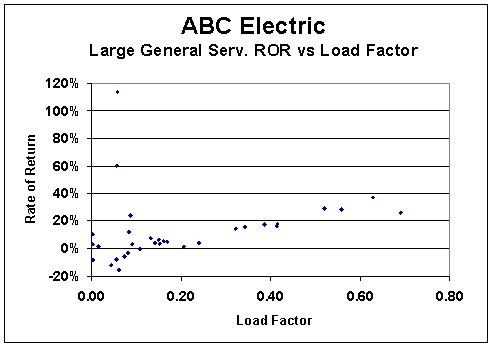
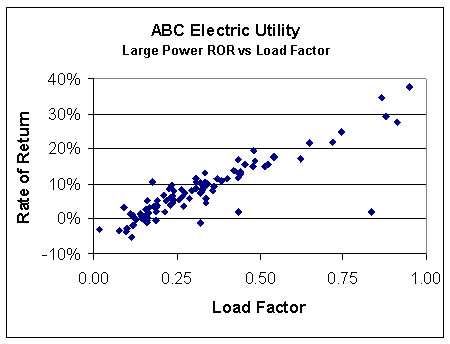
- Identifies differences in rates of return within rate classes
- Who are your most profitable customers?
- Least profitable?
|
|
31
|
|
|
32
|
|
|
33
|
|
|
34
|
|
|
35
|
|
|
36
|
|
|
37
|
|
|
38
|
|
|
39
|
|
|
40
|
- Likelihood of switching based on price may be mitigated or enhanced by
the customer’s satisfaction with and its attitudes regarding the current
supplier.
- Integrate the raw data from
previous attitudinal surveys and market research studies
|
|
41
|
|
|
42
|
|
|
43
|
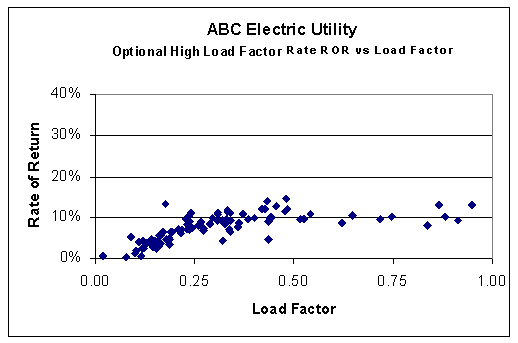
- Large differences in profitability within classes result from rates that
are not cost based
- Cost based rates reduce or remove within-class subsidies
- Reduces revenue variability
- Need accurate information on cost allocation (role for AMR)
|
|
44
|
|
|
45
|
|
|
46
|
|
|
47
|
- Targeting vs. One Size Fits All
- Choice vs. Control
- Rate options as a foundation for a marketing program
- Bundling rates with products and services that take advantage of the
rate
|
|
48
|
|
|
49
|
|
|
50
|
- Unbundle into at least 5 components
- Generation demand
- Generation energy
- Transmission demand
- Distribution demand
- Customer charge
|
|
51
|
- Components of an unbundled rate structure can better reflect principles
of cost causation
- Coincident peak (CP) basis > production and bulk transmission
components
- Non-Coincident peak (NCP) basis >distribution, radial transmission
and transmission substation components
- Rate structure that will be utilized by electric utilities in a more
competitive environment
- More tools to use in working with customers
|
|
52
|
- Load all margins on distribution and customer charges
- No margins on generation energy or demand
- Bulletproofs utility financially
- Reduces financial impacts of switching
- Similar to rates for natural gas LDCs
|
|
53
|
- Relationships established through multiple transactions with the
customer
- Multiple transactions as an exit barrier
- A web that helps to retain customers
|
|
54
|
- Price / Value relationship
- Increasing value rather than reducing price
- Utilizing value added products and services
- Role for AMR in providing value added products and services
|
|
55
|
- Definition of basic electric service
- Identification of premium services
- Menus of fee-based services
- Bundling fee-based services
|
|
56
|
- Billing data
- Usage data
- Cost allocation
- Customer profitability
- Price elasticity
- AMR data as a value added product
- Infrastructure for delivering real time prices
|

 Notes
Notes